HeadImage

HeadImage

Thursday 22 April 2010

Table Legs

My brother once made a bird table.
And another time, he made a table - I can't remember what it was to be used for - something light like wallpapering possibly!

But neither stood up.

It's a tricky business: table legs. A flat surface with four legs - and how are those legs joined to the table. A lazy nail through the top and into the leg won't work.

And maybe that's why this lovely table leg in a lovely pub (alehouse??) in London caught my eye:Or maybe it's just because it's so beautiful and clever that it caught my eye. I'm a sucker for beauty and cleverness.

Friday 16 April 2010

The Bridge in Ireland inspired by a Harp

I've always been quite cynical about the idea that the Calatrava bridge at Macken Street was inspired by a harp. How fitting?! How handy! The harp is a native symbol of Ireland. Strings are cables. And curved steel can imitate curved carved wood.
Santiago Calatrava has designed other bridges in similar style:
  • Serreria Bridge in Valenica, Spain
  • Footbridge Puerto Mujer, Buenos Aires, Argentina
  • Light Rail Train Bridge, Jerusalem, Israel
  • Katehaki Bridge, Athens, Greece
  • Sundial Bridge at Turtle Bay, California, USA
  • an early design for the Alamillo Bridge, Seville, Spain
But today, listening to Morning Ireland on Radio One, I was alerted to Love:Live Music day. One of the many free performances involved 12 harpists, strewn across the bridge playing music.
When I arrived at lunchtime today (thankfully) there was no strew-ing. On the south-side, there was a cluster of harpists strumming Carolan tunes harmoniously. And I thought (I love Carolan's music) that perhaps this connection might not be a bad thing... and might possibly, I conceded, be intentional. Because the Beckett bridge does join the mast and the flat bridge at a particularly graceful angle and the steel given a particular design treatment at this point.
However, I am far from convinced - mostly because a harp on its side is a daft symbol!
Similarly, the bridge in Greece claims to be inspired by Athenian sailboats - perhaps part of the designer's charm is making these tenuous links between a generic, international bridge design and the native culture.I've tried rotating an image of the bridge and comparing it to a harp - the most noticeable difference/mismatch is that the strings on a harp run from the flat towards the top which is concave. If we are to look at the cables on the bridge running from the flat - they go towards a convex curve.
Too much analysis always spoils the fun so I'll finish by admiring the heavy steel at the base of the mast again - that shape and angle and mould and curve does bring a harp to mind.

Thursday 15 April 2010

Designing a game #2: Metagambling

The Strategic Quiz is not as good as it could be.
It's a little nasty; becomes about bringing someone down.
So here's an untested suggestion for improvement:
  • place bets on the person likely to give the correct answer (points added if you were right; points deducted if not)
  • more points for correct answer
  • one point against everyone who answers incorrectly
(these notes were scribbled by my father last night and I can't make them out...)

Thursday 8 April 2010

Plastic brickwork

Isn't it horrible?? A little shed (public toilet?) being constructed in Howth I think.
I remember in India, the men sitting on the roadside shaping bricks and firing them.
And I remember learning about "specials" and "special-specials" in college.
Progress = plastic sheets with bricks drawn on. Sigh.

Saturday 27 March 2010

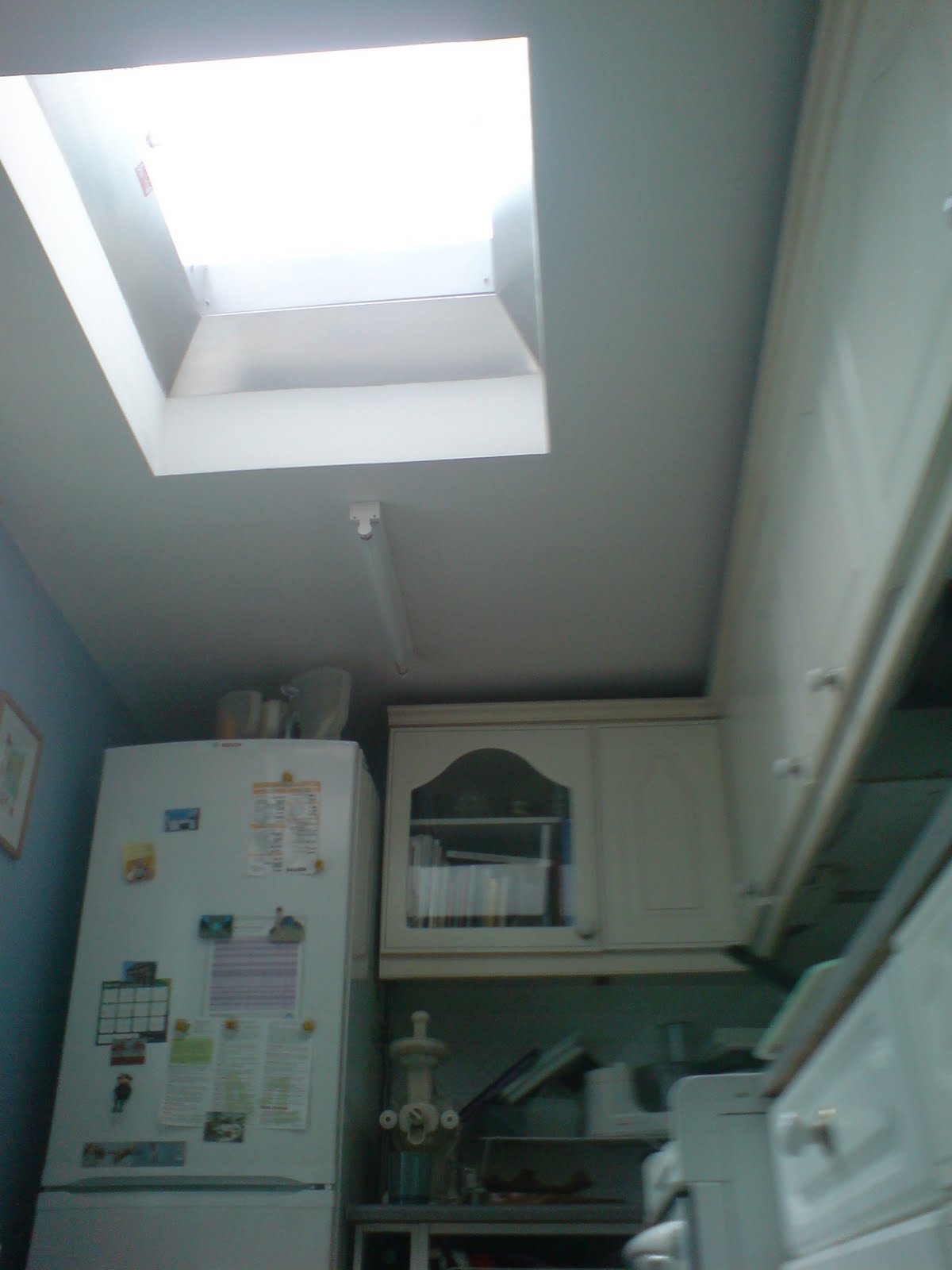
What a difference a... rooflight makes

My aunt has a narrow galley kitchen.
Recently, a rooflight was added.
The room is flooded with light and seems wider and more spacious.

Wednesday 24 March 2010

National Print Museum

The National Print Museum of Ireland is located in an old barracks which now houses, amongst other offices, the Labour Court. It's on Haddington Road in Ballsbridge. I have intended calling in there for a long time and finally, I paid my visit. I think I found the location a bit daunting. After passing through that great stone gateway, would I be able to find my way. A check beforehand of the website helped. A sign in the window of a building in the yard anouncing "Free Exhibition" didn't. The sign and the building had nothing to do with the Print Museum.

The Museum is in the former Chapel.

Passed through the coffee-shop/tea-room, greeted by a girl at reception/shop, given an individual guided tour while an elderly man used the machinery - he was printing a poetry book, I think. All the machines are in working order.
One definite thing I learnt, was that the letters we often associate with old print presses - be they in wood or copper (maybe) - those letters are only moulds. Each time a document is printed, new letters are formed - from a silvery metal, using those moulds. So one of the machines in the process is just making little letters from moulds - either monotype (each letter is done singly) or linetype (where a line of letters is formed stuck together and this of course can be justified - an amazing rotary thing figures out the gap required when all the moulds in the line of print are in place).
Wow! An education! And no doubt, much more to be learnt.
If I brave the yard again!

Thursday 18 June 2009

Museum of Style Icons


The Newbridge Silverware Museum of Style Icons made for a great day out. Free entry. Full of items.
Curating could have been a little less haphazard and a little more organised. The idea behind the displays wasn't always consistent. Having the umbrella from the photographs or the costumes from the films is a gorgeous idea - shame the video screens weren't working.